Aligning Ownership With the Way You Actually Live
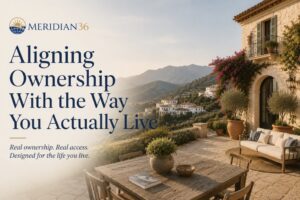
There is a quiet assumption sitting underneath most conversations about owning a place you love: that more ownership is always better. More square footage, more control, more of your name on the title.
That assumption deserves questioning directly, because for a meaningful number of people, it simply is not true.
Ownership Built for a Different Life Than the One You Have
The traditional model of owning a second home was built around a particular kind of life. Long, uninterrupted summers. Generations of the same family returning to the same place, year after year, for months at a time. Plenty of time to justify carrying the full cost alone.
Very few people actually live that life anymore. Work does not pause for months. Family schedules are more fragmented, not less. The romantic idea of the family home that everyone uses constantly has, for most people, quietly become a place that gets used for a few weeks a year and managed from a distance for the rest of it.
The ownership structure never updated to reflect that shift. Most people are still buying property the way their parents or grandparents did, for a life they no longer actually live.
We are helping people align ownership with the way they actually live.
What Alignment Actually Looks Like
Aligned ownership starts from a different question. Not, what is the most property I can afford to own. But, what is the right amount of ownership for the way I actually spend my time, in the place I actually love.
For some people, that still means full ownership: months at a time, every year, with full ownership genuinely fitting the life behind it. The structure should always match the use.
For a great many other people, the honest answer is that a structured share fits far better than full ownership ever did. Real ownership. Real, dependable access. Costs that scale with actual use rather than a full year of carrying a property largely unused.
This Is Not About Owning Less
It is important to be clear about what this is not. It is not an argument for wanting less, settling for less, or treating ownership as something to be minimized.
It is an argument for owning more honestly. For matching the structure of what you own to the reality of how you live, rather than to an inherited assumption about what ownership is supposed to look like.
That distinction, between owning less and owning more honestly, is the entire idea behind a more thoughtful approach to lifestyle ownership. Not a smaller version of the dream. A more accurate one.